Friday, May 3, 2019

Famous Last Words: Week 15

After it has all been said and done, I really enjoyed this class. I got to read so many stories, both original folk tales and second hand stories, that I would have never come across had I had never taken this course. I also found that I really enjoy creative writing. Having the opportunity to let my imagination run wild and create stories how I thought they should be is something I have not really gotten a chance to do in other classes, or in any setting. And the coolest part about creating your own stories is seeing that other people actually read them and enjoy them. I liked getting feedback and learning from other students' writing styles and techniques in order to better my own. My only regret is that I didn't buckle down like I should have early in the semester. I have caused myself unnecessary stress by putting off work until the end of the semester. But despite my procrastination, I genuinely feel that I learned so much in this class about reading, writing, myths, mindset, technology, and more. Thank you Professor Gibbs for teaching me this semester.

Extra Reading Notes: Three Supernatural Stories

-Witches at the Cross
-Joe heard of old women who climb up and down crosses so he rode his horse to go see
-he made a circle with blessed chalk
-when he stepped outside the circle the witches chased him to his house
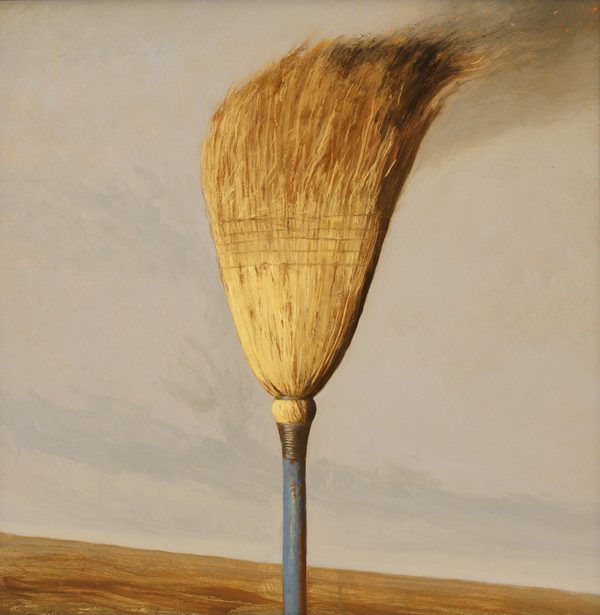
-they couldnt go any further but one threw a burning broom at him

Burning Broom. Source: Bo Bartlett

-The With and the Horseshoes
-there was a farmers wife who was a witch
-she grew restless after a holiday so she flew up a chimney
-the farmer seeing this from afar, did the same thing after her
-to hide she became a horse
-he mounted the horse and took it to the smith to put horseshoes on it
-the next day, the women had on 4 horseshoes

-The Haunted Mill
a rope dancer and some monkeys went to a haunted mill
-a man came into the mill with fish which the monkeys tried to steal
-the man slapped the monkey away
-the rope dancer had a bear which ran over to get the fish
-the man slapped it away
-the bear didnt like that and gave the man a beating and drove him out


"Three Supernatural Stories" from The Key of Gold by Josef Baudis (1922).

Wikipedia Trail: from Rübezahl to Cypress

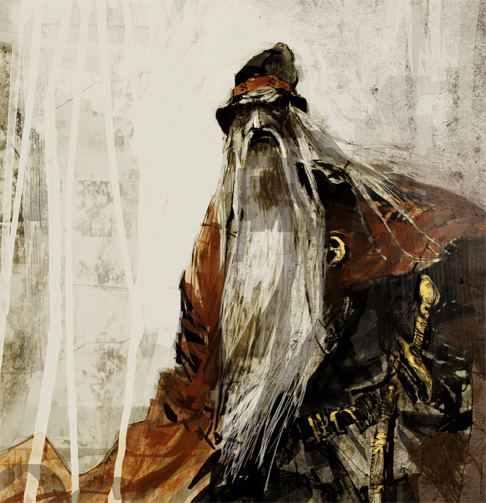
Rübezahl - Rubezahl is a mythological mountain spirit from Silesia and the main character in my storybook. This article explains the origin of his name and provides a list of works about him. Rubezahl is a mountain spirit which I learned can also be called a "woodwose."

Woodwose - Woodwose comes from Middle English and means "wild man." All sorts of mythological traditions from around the world have some type of woodwose, but they are remarkably popular in early European myths. One woodwose I had not heard of and found interesting was Silvanus.

Silvanus - Silvanus, meaning "of the woods" in Latin, is a Roman protector spirit of the woods and fields. I found it interesting the Silvanus is most likely not a Hellenic deity but was most likely an original Roman deity given that the Etruscans had a very similar deity with roughly the same name. In art, Silvanus is recognizable because he is always seen carrying a branch from a cypress tree

Bronze statue of Silvanus.

Mediterranean Cypress - Cupressus sempervirens, more commonly known as cypress, is a tree found throughout the eastern half of the Mediterranean. The species name, sempervirens, is Latin for "always green."

Learning Challenge: Sleep

In the video found HERE, I learned just how essential sleep is for physical and mental health. Sleep is the bodies natural mechanism to restore its energy and clear waste material from the brain. Most adults require 7-8 hours of sleep per night and most adolescents need 10. Being deprived of sleep can lead to hormonal imbalance, sickness, and even death. Someone who is severely sleep deprived may lose coordination, memory functions, and might even hallucinate; symptoms of chemical waste building up in the brain. I hate to admit it, but I deprive myself from a lot of sleep and I'm am more than aware of these symptoms. I have been so tired before that I fell asleep standing up. This video is just another reminder that I need to take better care of myself. It's simple really to just go to sleep on a regular basis, and the health benefits are well worth it.

Effects of Sleep Deprivation. Source: Wikimedia Commons

Growth Mindset: Random Cats


I liked this image because it relates to the TEDEd video I just watched about creative constraints and how observe and understand those constraints so that you are able the innovate within them. I also picked it because I like to think I am a very observant person.


I liked this one because I agree with its message whole-heartedly. Every expert was a beginner at one time. But with persistence and the ability to learn on the fly, anyone can become proficient with just about anything. The quote also goes hand-in-hand with one of my favorite quotes: "Fake it 'til you make it."

Week 15 Lab: TEDEd Videos: Style

The power of creative constraints - Brandon Rodriguez - In this video, Brandon Rodriguez discusses how constraints fuel creativity. Constraints provide a problem that must be creatively solved in order to get the desired result. He argues that these constraints provide a problem solver with the opportunity to innovate. The way I thought of it was this: in order to push the envelope, there must be an envelope to push.

Beware of nominalizations (AKA zombie nouns) - Helen Sword - In this video, Helen Sword explains how nominalizations, or the act of making a verb, adjective, or another noun into abstract and pompous nouns. At their best, nominalizations help describe complex ideas, but at their worst, they suck the life and action out of otherwise lively sentences. She calls these nominalizations "zombie nouns," because they tend to make a sentence dull and lifeless.

A zombie. Source: Wikimedia Commons

Tech Tip: Cheezburger

Made with Cheezburger

Thursday, May 2, 2019

Reading Notes: Vainamoinen and the Mistress of Pohjola

-Vainamoinen swims in the open ocean for 9 days and his toenails were falling off
-V exclaims how unlucky he his to live this type of life and how he can't build a house in the water
-an eagle from Lapland spots V and asks V what brought him here
-V says that he was looking for the maid of Pohja and that he fell in the water when someone shot his horse out from underneath him
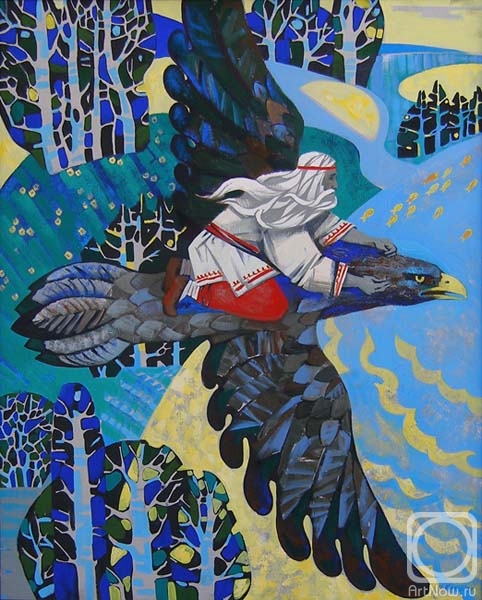
-the eagle said he remembered when V saved the tree from being cut down for the birds so he would let V climb on his back and fly him wherever
-V mounted himself on the eagle's back
-it flew V to Pohja and then left

"Flight of Vainamoinen" by Kolobova Margarita, 2013. Source: Art Now

"Vainamoinen and the Mistress of Pohjola" from Kalevala by Elias Lönnrot, translated by W. F. Kirby (1907).

Wednesday, May 1, 2019

Reading Notes: Vainamoinen Goes Fishing

-the news spread of the maiden who perished
-Vainamoinen deeply mourned her loss
-he went to a lake and asked Untamo the sleeper where swell the fair maidens
-Untamo answered near the cloud-encompassed headband, near the ever misty island...
-V checked his fishing gear and made his way there in his boat
-then he began fishing in the cape with clouds encompassed and near the ever misty island
-he caught a salmon-trout early in the morning
-he remarked how it was unlike any fish he had ever seen
-he drew his knife with the intention of cutting it up and eating it for breakfast
-the fish sprang to life and jumped from the boat
-it said, "surely I haven't come here in the form of a salmon in order to become your breakfast."

Vainamoinen. Source: Alchetron

"Vainamoinen Goes Fishing" from Kalevala by Elias Lönnrot, translated by W. F. Kirby (1907).

Monday, April 29, 2019

Review: Week 14

Graphic: My favorite graphic from this week was the Latin proverb about dragons. It introduced me to a Latin prose that I had not seen before and I like the meaning behind the proverb: one does not improve his own standing without harming someone else

Source: Go Proverbs!

Video: My favorite video from this week was the musical version of the Epic of Gilgamesh performed in Sumerian. I read and studied the Epic of Gilgamesh in an Ancient Near East Civilizations class I took a few semesters ago. And on top of already enjoying the Epic of Gilgamesh, I also really love to listen to folk music from around the world.


Famous Last Words: Week 14

Most of this semester has been quite hectic. On top of trying to keep up with school work, I have been traveling across the country with the softball team. But this week was especially hectic. Typically, we leave for our weekend series on Thursday afternoons. This week though, we left early Wednesday morning to play a mid week game in Wichita and left straight from there to Ames, Iowa. In any spare time I happened to have, I tried to chip away at the vast collection of homework I had, including all the extra credit assignments in this class (because I still haven't given up on getting a B in the course). I have tried extremely hard to keep my procrastination to a minimum and I have missed out on a LOT of sleep but I think I managed to get everything accomplished. I am proud of the story I wrote to wrap up my storybook and hopefully I spent enough time on it so that I might not have too many revisions to make. Unfortunately, I don't have much time to catch my breath. This coming week looks to be just as hectic and I have just as much, if not more, homework than this past week. To be completely honest, I'm kicking myself every time I think of how much easier it would have been if I had just gotten hooked up earlier in the semester. I would be considerably less stressed and would still be a normal sleep schedule. But I understand that those are the consequences of prioritizing things other than school. But I am determined to see it through to the end of the semester. Somehow, I will try to find a way to get everything done. I can smell the finish line and rest is just around the corner.

Image Source: Christianbook

Wikipedia Trail: Hellebore to Herbicidal Warfare

Hellebore - I changed my iPhone background to one of the default flower wallpapers. I was interested in what type of flower it was. It turns out that the picture I chose is of a hellebore which is a poisonous flower native to Europe and Asia

Siege of Kirrha - Apparently, in 585 BC, during the Siege of Kirrha in the the First Sacred War in Greece, hellebores were used to poison the water supply of the city. This is one of the earliest instances of chemical warfare

Chemical Warfare - Chemical warfare has been around almost as long as war itself has been waged. The pinnacle of chemical warfare is most likely the devastating mustard gas attacks during the First World War

Herbicidal Warfare - This is a specific type of chemical warfare in which neither people are not the direct targets of the attack. Rather, the attacker attempts to destroy the enemies crops using herbicides in an attempt to cripple war efforts. This was a common tactic used by the United States during the Vietnam War.

Hellebores. Source: Home Depot

Learning Challenge: Reading Out Loud

I have always thought that I read slower, mostly because the way I read in my head is the same way I would read out loud. But, I found that when I read out loud, it was as if I was telling the story to myself. It took longer to read the story but I felt like I got more out of the reading. I used inflection and pauses when reading the dialogue and I held a certain tone while reading narrative parts. Reading out loud helped me to understand the story on a deeper level than just the plot because I had to build a character's persona when I read for them. I also found that I noticed, and remembered, more details about the story after reading out loud compared to reading other stories silently.

Image Source: Joel Goldman

Growth Mindset: Acronym

Take
Advantage
of
Comprehensive
Talents

To be tactful means being adroit in dealing with difficult issues. In order to be tactful, you have to be thoughtful and able to find solutions to unique problems. One must use their talents they already possess to their full potential in order to solve a problem. This acronym just reminds me to 1. be tactful and 2. use my strengths in problem solving.

Quote from Isaac Newton. Source: Quotes Cover

Tech Tip: YouTube Playlist


Besides Google itself, I visit YouTube more than any other website. I created this playlist as a collection of my girlfriend's high school softball highlights mostly to embarrass her. Most of the time, I use playlists to organize videos that I might come back and watch again. I also utilize YouTube's default playlist of liked videos to find old videos that I think are funny or really interesting. Having all of those videos in one place is really handy when I remember seeing a video I liked and would like to watch it again or share it with someone else.

Extra Reading Notes: The Two Corpses

-a soldier was heading home on leave when he had to pass a graveyard in the middle of the night
-he heard a voice running up behind him saying, "Stop! You can't escape!"
-the soldier saw it was a corpse chasing him so he B-lined it towards a little chapel
-in the chapel was another corpse and no one else
-the soldier hid in the corner
-the first corpse ran in
-the corpse on the table rose and asked the other, "What hast thou come here for?"
-He said that he had chased a soldier into the chapel and that he was going to eat him
-The second corpse argued that the soldier had run into his house so it would eat him itself
-"No! I shall!"
-"No! I shall"
-The corpses began to fight
-they fought for so long that with the coming of morning, they fell lifeless
-the soldier went on his way home

"Skeletons Fighting" by Theodore Major. Source: Pinterest

"The Two Corpses" from Russian Folktales unit. Story source: Russian Fairy Tales by W. R. S. Ralston (1887).

Friday, April 26, 2019

Week 14 Lab: Creative Life TED Talks

Video 1: Copyright is Brain Damage

In this video, Nina Paley mainly discuses the need for copyright reform. She argues that claiming rights on intellectual property does not ultimately benefit the creator of the ideas and instead prohibits the continuation and evolution of art. I really enjoyed the analogy Paley made regarding information. She compared people to neurons, each one part of a vast network, receiving and transmitting information to one another to make up a "great mind." the ideas that this great mind form is culture. However, copyright is a brain disease because it allows ideas to flow into a neuron, but not to be sent out. Therefore, copyright laws must be reformed, or even abolished, in order for the great mind to work freely.

Image Source: Photo District News

Video 2: A New Theory of Human Intelligence

In this video, Dr. Scott Barry Kaufman discusses the need to rethink human intelligence. He says that in the current education model, too many kids fall through the cracks because it is unable to  properly accommodate the unique needs of what he calls twice-exceptional children: those children simultaneously having exemplary strengths and extraordinary weaknesses. The current binary system categorizes children based on ability and disability when it should be holistic and all-encompassing. The theory Dr. Kaufman presents focuses on the four C's: Capacity: the potential intelligence and aptitude; Competence: the actual intellectual achievement; Commitment: the motivation and determination to learn; Creativity: problem solving and the ability to hurdle intellectual obstacles.

Thursday, April 25, 2019

Reading Notes: The Fox and the Horse

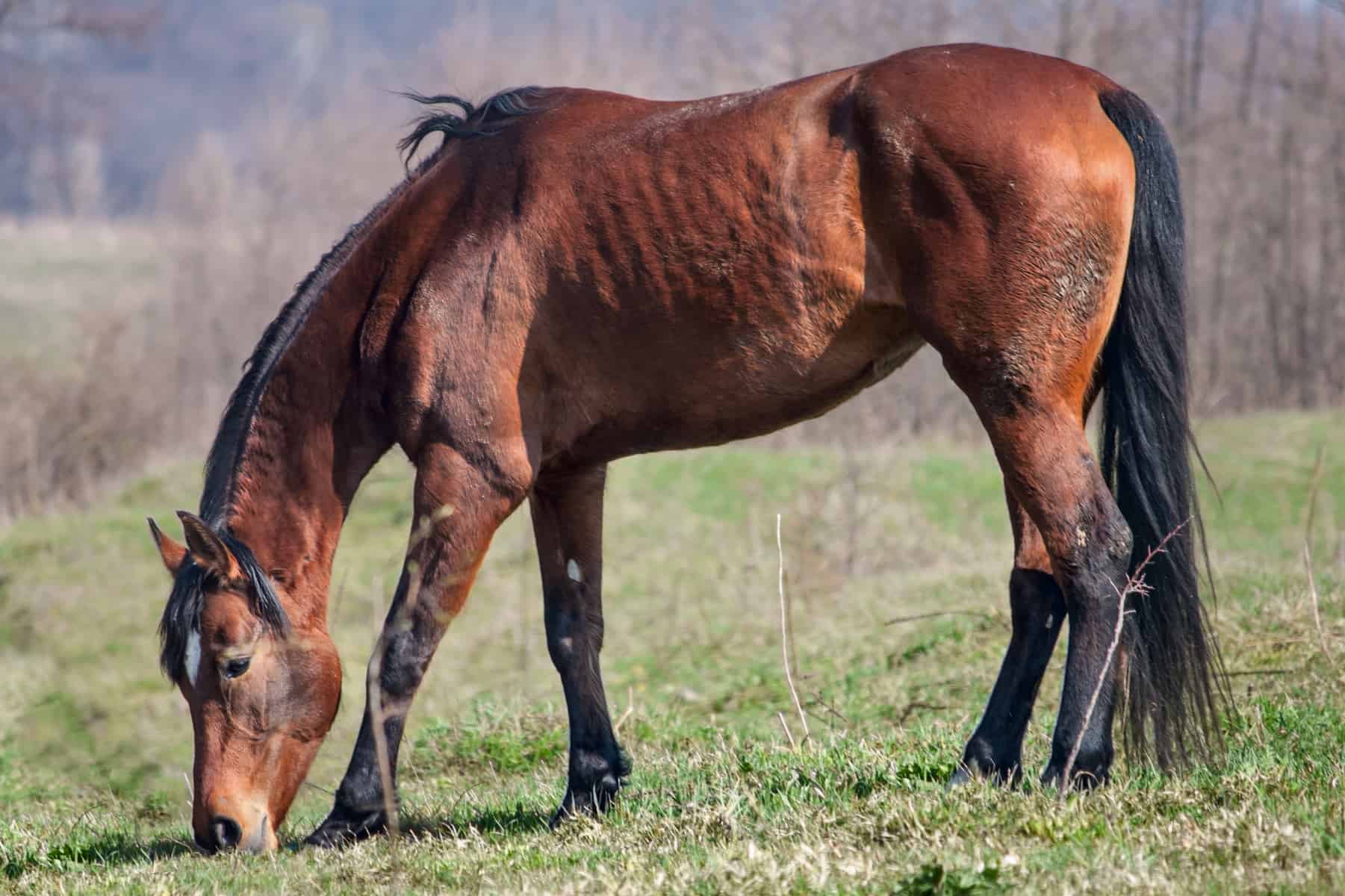
-A farmer had a horse that had grown old and weak so he turned it out of the stable
-while the horse was seeking a shelter in the woods, he met a fox who asked him why he was so sad
-the horse tells the fox that his master will not take him back unless he becomes stronger than a lion
-the fox told the horse to pretend to be dead
-the fox went to the lion and told it of a dead horse
-the fox says the lion can eat the horse more comfortably in his cave so he ties the horse to the lion
-the fox managed to tie his legs together
-the fox then told the horse to go
-the horse dragged the lion back to his masters house
-his master relented and took care of him till the end of his life

An elderly horse. Source: The Horse

"The Fox and the Horse" from Fairy Tales by the Brothers Grimm, an audiobook recording available at LibriVox based on a Project Gutenberg publication.

Wednesday, April 24, 2019

Reading Notes: The Straw, the Coal, and the Bean

-there was a poor woman who decided to build a fire on her hearth to cook some beans
-a piece of straw fell from the bundle, a bean from the pan, and a piece of coal from the fire
-each tells the other how they were almost destroyed by the old woman
-to escape her, they decide to run away to a foreign country
-on their journey, they come to a brook which they must cross
-the straw lays itself out to form a bridge
-the coal starts to cross but becomes scared half way and stops
-the straw burns because of this and the two fall in the brook and are swept away
-the bean seeing this, laughed so hard it burst
-a tailor happened to be passing and because he had compassion for the bean, he sewed the bean back together
-he only had black thread though
-this is why every bean has a black seam

Black-eyed Peas. Source: Wikimedia Commons

"The Straw, the Coal, and the Bean" from Fairy Tales by the Brothers Grimm, an audiobook recording available at LibriVox based on a Project Gutenberg publication.

Monday, April 22, 2019

Wikipedia Trail from Umlaut to Gregorian Calender

1. Umlaut - the umlaut is the two dots above vowels in German to tell the reading that that vowel sound should come from the front of the mouth

2. Tilde - the squiggly line above some N's in Spanish was originally scribal shorthand used to denote the title of something, which is where it gets its name: from the Latin word titulus meaning "title"

3. Anno Domini - usually abbreviated to AD and means "in the year of the Lord" in Medieval Latin.
However, it is becoming more common to use CE, meaning "common era," in place of AD

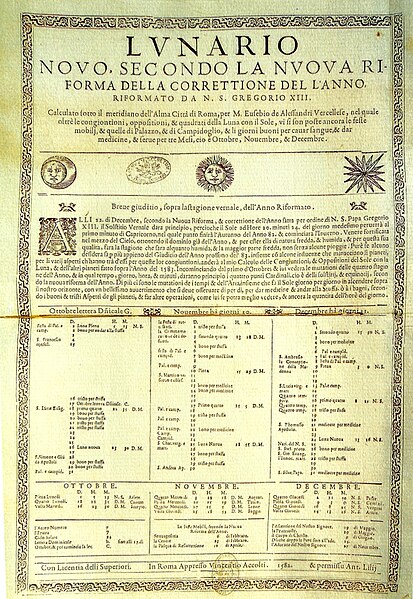
4. Gregorian Calendar - the calendar introduced by Pope Gregory XIII in 1582 that we still use today.

One of the first printed editions of the Gregorian Calendar. Source: Wikimedia Commons